Learn what materials and fits make the best running socks. Choosing the right pair protects your feet from painful blisters, wicks excess moisture during intense workouts, and delivers targeted impact support on every stride.
Ditching Cotton: The Technical Fabric Advantage
Standard everyday cotton holds onto sweat, causing persistent moisture buildup that weakens your outer skin layer within minutes of pavement pounding. Modern running socks leverage advanced synthetic blends like nylon, polyester, and elastane to actively pull moisture away from your feet toward shoe upper mesh vents. Merino wool blends also offer exceptional microclimate control, retaining thermal balance during crisp morning runs while preventing odor buildup naturally.
Pro Runner Recommendation
Never pair high-end running shoes with casual cotton socks. Proper moisture evacuation requires synthetic or merino fibers to eliminate friction hot spots entirely.
Essential Structural Features for High Mileage
A reliable athletic sock functions like a tailored second skin that moves synchronously with your footwear. The following construction details keep your feet shielded during 5Ks and ultramarathons alike:
- Seamless Toe Construction: Flat-knit or hand-linked toe seams eliminate raised internal ridges across the knuckles, preventing abrasion and bruised toenails.
- Targeted Arch Compression: Elastic ribbing across the midfoot prevents fabric slippage on sharp descents while supporting the plantar fascia arch.
- Zonal Impact Cushioning: High-density padding under the heel strike zone and metatarsal pads softens road impact without crowding your shoe volume.
Selecting the Right Cuff Height
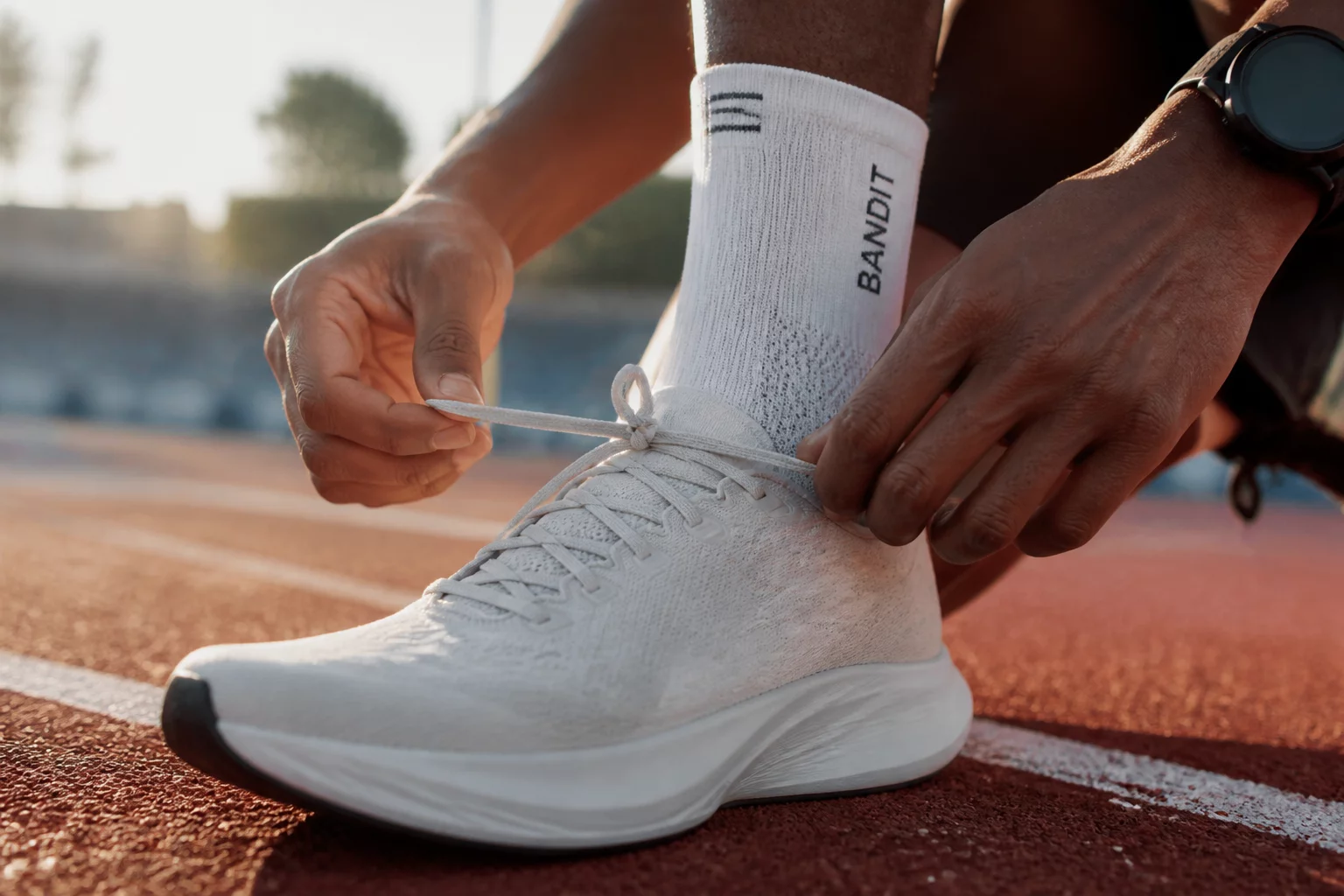
No-show and tab cuts keep weight minimal during warm road workouts, with rear heel tabs stopping collar chafe. If you venture onto loose gravel or forest trails, choose quarter or crew cuts to shield your ankles from trail debris, mud, and scratchy weeds.
Mike B.
Verified BuyerOutstanding quality and rapid delivery!
Great tips, thanks!